
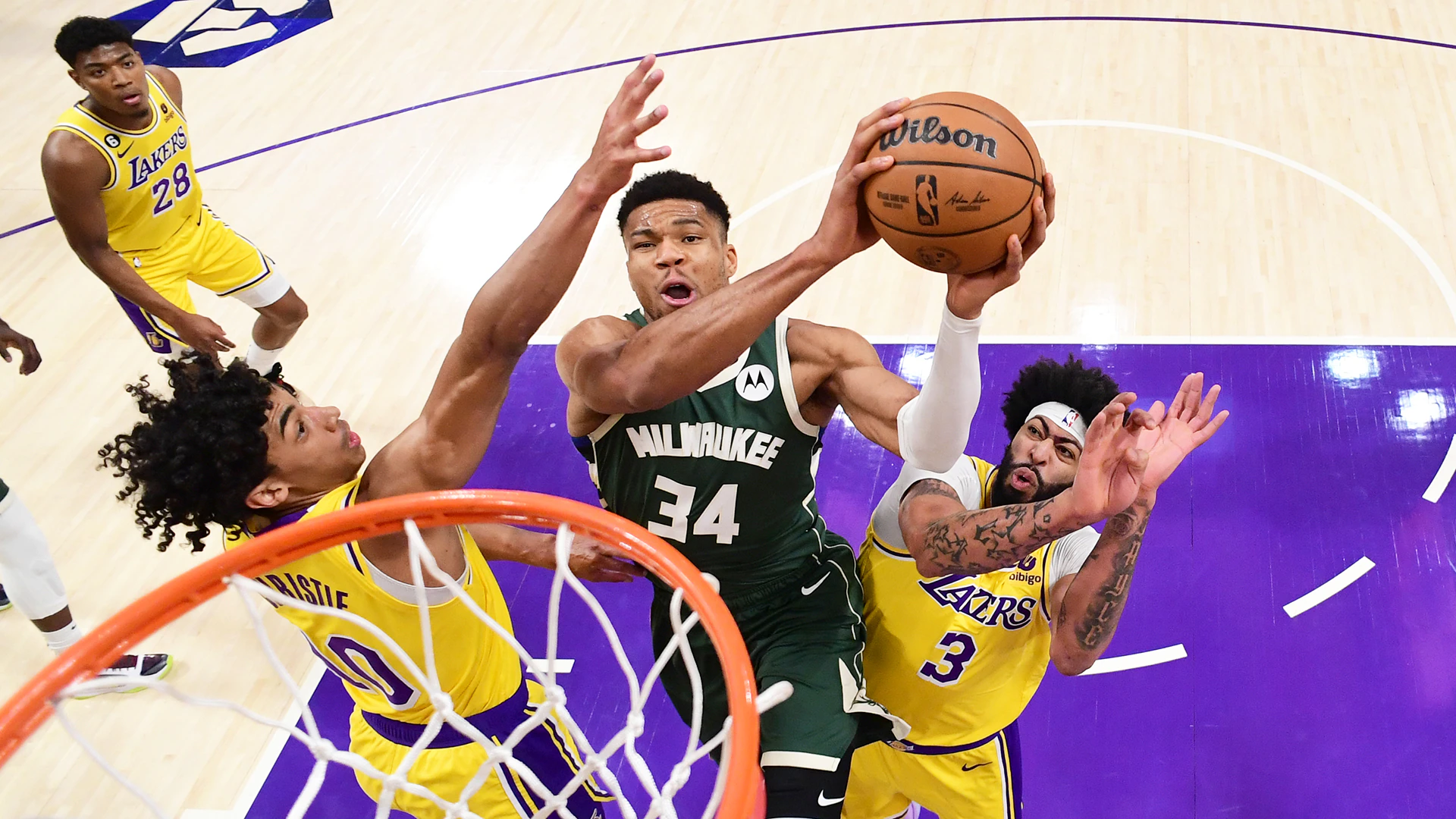
Lakers vs Milwaukee bucks match player stats immediately tell a deeper story than the final score ever could, especially when two powerhouse franchises collide under the brightest lights. This matchup wasn’t just another regular-season game. It felt like a playoff preview, packed with intensity, star power, and momentum swings that kept fans locked in until the final buzzer.
From the opening tip-off, the energy inside the arena was electric. Every possession mattered, and every stat reflected the pressure both teams carried. The Lakers leaned on experience and adaptability, while the Bucks trusted their system built around strength, speed, and elite efficiency. What followed was a basketball chess match where individual performances shaped the narrative minute by minute.
The numbers from this game don’t just highlight who scored the most points. They reveal defensive adjustments, leadership moments, bench impact, and the subtle contributions that often go unnoticed. When you break down the performances player by player, the game becomes even more fascinating.
Setting the stage for a marquee NBA clash
When the Los Angeles Lakers and Milwaukee Bucks share the court, expectations rise instantly. Both franchises carry championship DNA, and both rosters are stacked with players who thrive under pressure. This game arrived with heavy anticipation due to recent form, injury comebacks, and playoff implications.
The Lakers entered the matchup seeking consistency. While flashes of brilliance had appeared in recent games, they needed a complete performance against an elite Eastern Conference opponent. Milwaukee, on the other hand, came in with confidence, powered by strong defensive metrics and efficient scoring across their starting lineup.
From a tactical standpoint, the contrast was compelling. The Lakers relied on versatility, switching defenses, and veteran decision-making. The Bucks emphasized physical dominance, rim protection, and pace control. These philosophies showed clearly in the match player stats, offering a clear window into how each team tried to impose its will.
First-half momentum and early stat trends
The opening quarter set the tone for a tightly contested battle. The Lakers focused on ball movement, creating open looks through smart cuts and quick passes. Early stats showed high assist numbers, indicating their intent to avoid isolation-heavy possessions.
Milwaukee responded with physical defense and fast-break efficiency. Their transition points stood out early, reflecting how well they converted turnovers into scoring opportunities. Rebounding numbers also leaned in their favor during the first half, giving them valuable second-chance points.
As the second quarter unfolded, individual performances began to separate themselves. Shooting percentages became a key storyline, especially from mid-range and beyond the arc. While both teams traded runs, the stat sheet showed how small details like free-throw accuracy and defensive rebounds kept the game within a narrow margin.
Lakers vs Milwaukee bucks match player stats spotlight Lakers’ core performers
The Lakers’ star players delivered performances that blended experience with calculated aggression. Their leading scorer showcased elite shot selection, balancing drives to the basket with confident perimeter shooting. His efficiency rating reflected not just volume scoring, but timely buckets that stopped Milwaukee runs.
The primary playmaker for Los Angeles quietly posted impressive assist numbers. His ability to read the floor and exploit defensive mismatches resulted in high-quality scoring chances for teammates. Turnover control was another positive, highlighting disciplined decision-making against a tough defensive unit.
Defensively, one of the Lakers’ veterans stood out with multiple steals and contested shots. These contributions may not always dominate headlines, but they shifted momentum at crucial points. Advanced metrics from the game showed his on-court impact clearly, especially during late second-quarter minutes.
The bench also played a meaningful role. One reserve guard provided instant offense, boosting the Lakers’ scoring output during a stretch when starters rested. His plus-minus rating reflected how those minutes kept the team competitive and prevented Milwaukee from building separation.
Milwaukee Bucks’ star power reflected in the numbers
Milwaukee’s leading superstar once again proved why he’s among the league’s most dominant forces. His stat line was a masterclass in all-around excellence, combining scoring, rebounding, and playmaking. What stood out most was his efficiency in the paint, where he converted a high percentage of attempts despite constant defensive attention.
The Bucks’ secondary scorer complemented him perfectly. With a smooth shooting stroke and strong off-ball movement, he punished defensive lapses and stretched the floor. His three-point shooting percentage played a major role in Milwaukee’s offensive rhythm throughout the game.
Defensively, the Bucks’ anchor made his presence felt with shot-blocking and rim deterrence. Even when he didn’t record a block, his positioning altered Lakers’ shot choices. This influence doesn’t always show fully in traditional stats, but the reduced field-goal percentage near the rim told the story.
Role players also stepped up. One forward in particular delivered a balanced performance, contributing points, rebounds, and hustle plays that energized the team. His versatility allowed Milwaukee to maintain defensive intensity while keeping their offensive spacing intact.
Lakers vs Milwaukee bucks match player stats and the battle of efficiency
Efficiency became the defining theme of this matchup. While raw scoring totals were impressive on both sides, shooting percentages and possession management ultimately shaped the flow of the game. The Lakers excelled in mid-range efficiency, capitalizing on defensive gaps with controlled pull-up jumpers.
Milwaukee countered with dominance inside the paint. Their points in the restricted area highlighted their physical advantage and relentless attacking mindset. Free-throw attempts also leaned in their favor, showing how aggressively they pressured the defense.
Turnover stats offered another layer of insight. The Lakers protected the ball well in half-court sets, while the Bucks forced turnovers through active hands and quick rotations. These extra possessions translated into easy points, reflected clearly in fast-break scoring numbers.
From an advanced analytics perspective, true shooting percentage and offensive rating favored Milwaukee slightly. However, the Lakers’ clutch-time efficiency narrowed the gap, especially during key stretches in the second half.
Defensive intensity and hidden contributions
Defense often decides games like this, and the stats confirmed it. Both teams recorded strong defensive ratings during extended stretches, forcing contested shots and limiting open looks. The Lakers’ ability to switch effectively reduced Milwaukee’s pick-and-roll efficiency for several possessions.
Milwaukee’s defensive rebounding stood out as a quiet but crucial factor. By securing boards consistently, they limited the Lakers’ second-chance opportunities. This control of the glass helped them manage tempo and dictate pace during critical moments.
Steal and deflection numbers further highlighted the intensity. Guards on both teams played passing lanes aggressively, leading to momentum-shifting plays. These moments may last only seconds, but their impact echoed throughout the game.
Foul management also played a role. Players who avoided foul trouble were able to maintain defensive pressure without hesitation, contributing to consistent on-court impact that showed up in plus-minus metrics.
Coaching adjustments reflected in match stats
One of the most fascinating aspects of this game was how quickly both coaching staffs adjusted. After identifying early weaknesses, rotations shifted and defensive schemes evolved. The Lakers adjusted their coverage on drives, resulting in fewer paint points allowed in the third quarter.
Milwaukee responded by increasing off-ball movement, creating open looks from the perimeter. This adjustment showed immediately in assist numbers and shooting efficiency. The chess match between coaches played out clearly in the statistical trends quarter by quarter.
Timeout usage and lineup changes also influenced momentum. Short bursts from specific lineups delivered positive net ratings, proving the value of strategic substitutions. These details reinforced how preparation and adaptability contribute directly to performance metrics.
Fan reactions and real-world impact of the numbers
For fans watching live or analyzing the box score afterward, the stats told a story that felt personal. Lakers supporters saw encouraging signs in ball movement and defensive engagement. Bucks fans celebrated the consistency and dominance of their stars.
Social media discussions quickly turned to individual stat lines, debates over efficiency, and comparisons to previous matchups. Analysts highlighted how this game could serve as a blueprint for potential postseason encounters.
Beyond entertainment, these numbers influence narratives, award discussions, and confidence levels. Players know their performances are measured not just by wins, but by how they contribute across multiple statistical categories.
Lakers vs Milwaukee bucks match player stats in a broader season context
Looking at this game within the larger season framework adds even more value. For the Lakers, the stats reinforced progress in chemistry and execution against elite competition. Improvements in assist ratios and defensive efficiency suggested growth that could pay off later.
For Milwaukee, the numbers confirmed their identity as a balanced, disciplined contender. Their consistency across games, especially in advanced metrics, continued to set them apart as one of the league’s most reliable teams.
Comparing this matchup to earlier games revealed trends worth watching. Shooting splits, rebounding margins, and clutch-time performance all pointed to areas that could define future outcomes if these teams meet again.
This game wasn’t just a snapshot. It was a data-rich chapter in a season-long story, offering insights that coaches, analysts, and fans will revisit repeatedly.
Why these player stats matter beyond one game
Stats from marquee matchups like this shape reputations and expectations. They influence All-Star conversations, MVP debates, and strategic planning. When players perform under pressure, it builds trust within the team and belief among supporters.
For younger players, contributing meaningfully in such a high-profile game boosts confidence and accelerates development. Veterans, meanwhile, reinforce their leadership through steady, impactful performances that don’t always dominate highlight reels.
Ultimately, Lakers vs Milwaukee bucks match player stats serve as a reminder that basketball is a game of details. Every rebound, assist, and defensive stop adds up, creating outcomes that go far beyond the final score.
As fans and analysts revisit these numbers, the game continues to live on, not just as a result, but as a masterclass in elite-level basketball execution.
Read also:
OKC thunder vs Dallas mavericks match player stats: Complete Game Story
